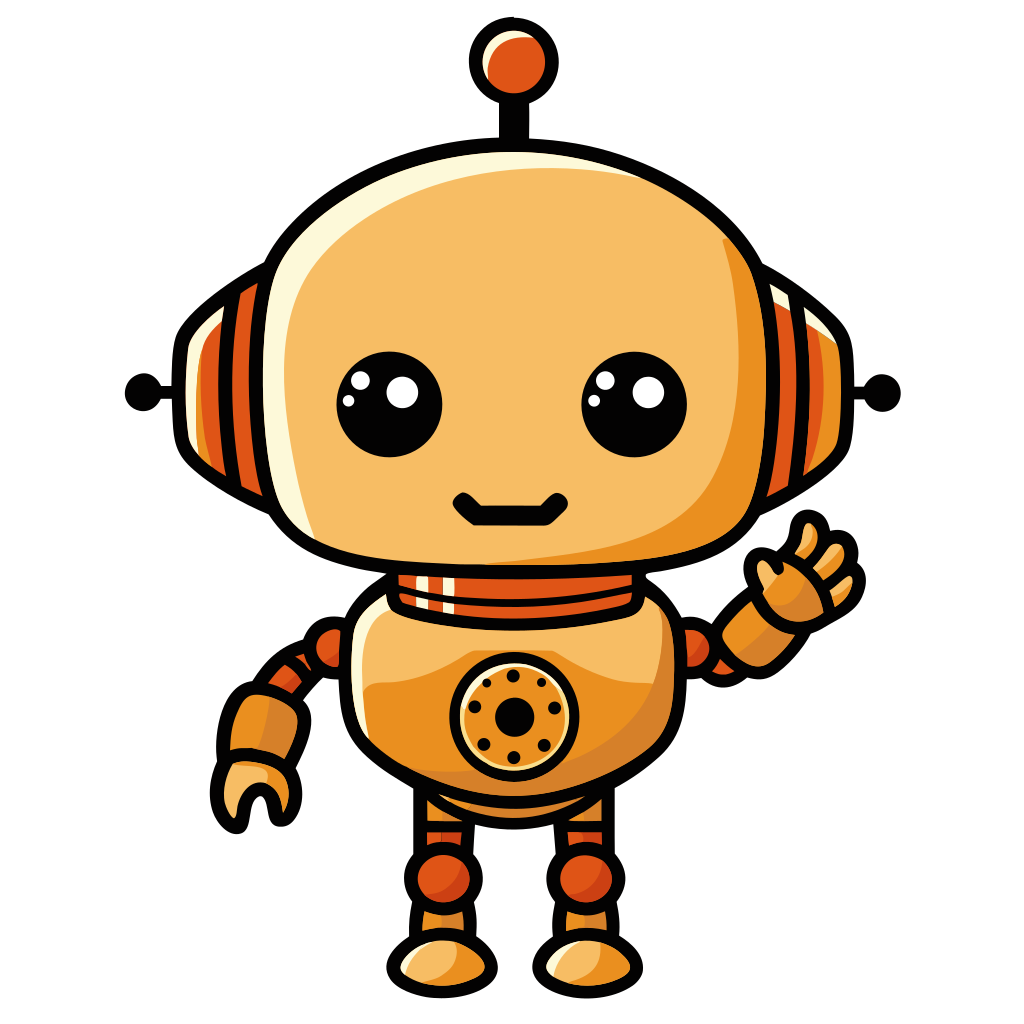
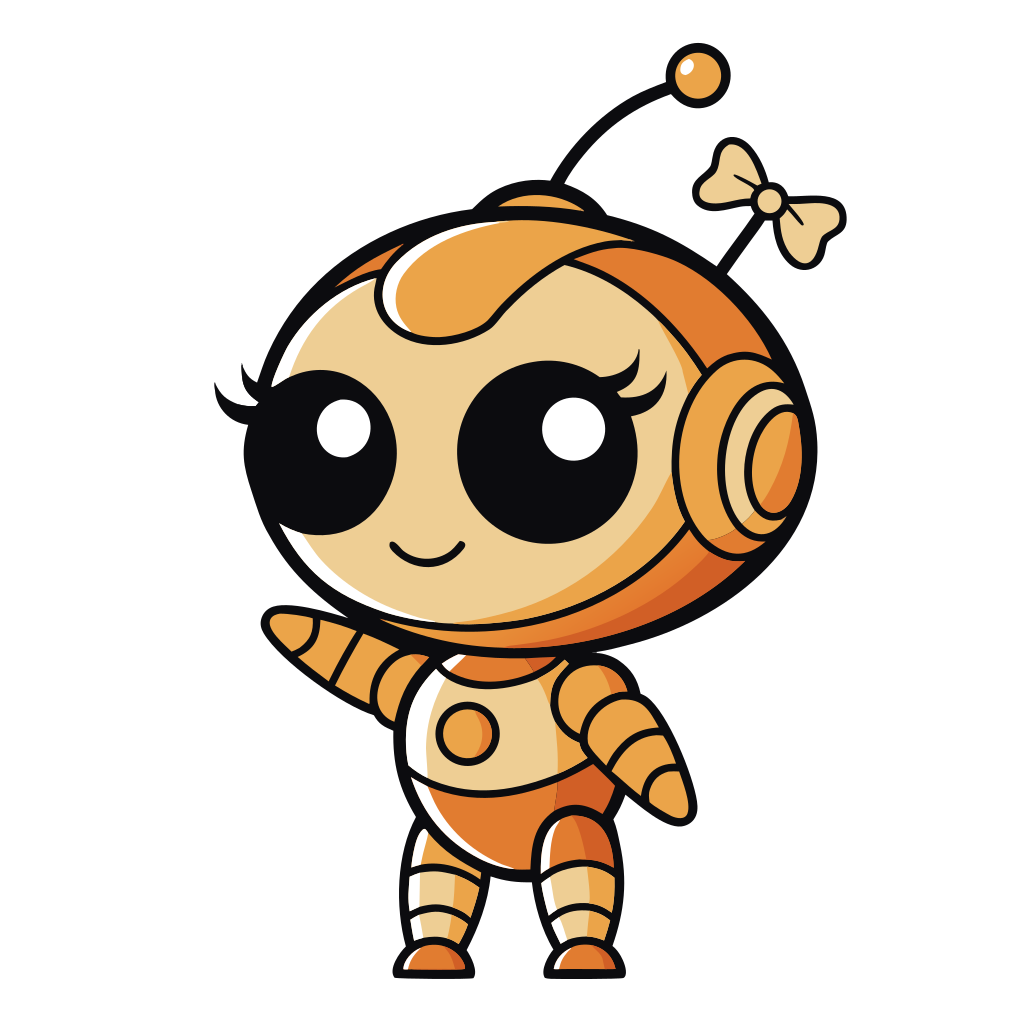
Aidan is broberg.ai's own AI guide — built on the house components with this whole universe as its knowledge base. Answers may contain mistakes.
Aidan wasn't bought in — he grew up here. The name is AI + Denmark: built in Aalborg, answering in Danish and English, with his data staying in Europe. He learned his trade from the house's own flagships — the project manager that verifies every promise, the memory that remembers why, and the ever-watchful teammate that catches mistakes before the customer does. Airina is the same brain with a different voice and face. Read Aidan's full story.
The technology behind
Aidan runs on the house's own components — the same technology we build customer solutions with. The language comes from a European AI model, the voices are neural voices, and everything runs on servers in the EU.
Your data stays in the EU
The chat is answered by an AI model hosted in Paris — no American models are involved in the conversation. Readings are generated and stored on our own European servers. Your email is only used if you ask to have an audio file sent, and only with your explicit consent.
Your conversation is yours
The conversation is stored solely in your own browser — not on our server, and never alongside anyone else's. Every message you send carries only your own conversation, so users' chats are hermetically sealed from each other. Aidan also cannot fetch data from the internet: he mechanically has no access to anything beyond the knowledge base we've given him — and that barrier is sealed with a test, so it can't be removed silently.
We eat our own dog food
Everything you see here — the chat, the read-aloud, the site itself — is built and run by the same AI tools we deliver to customers. We use them ourselves every day and improve them continuously, so what you're looking at isn't a demo: it's our own working toolset.
Aidan is an AI — answers may contain mistakes.